 how-to
How to Choose a Tattoo Style: 7 Steps That Work
Last Updated: November 10, 2026
Quick Summary
To choose a tattoo style, first decide what the tattoo should mean and the feeling you want it to convey, then compare core options like traditional, realism, blackwork, and fine-line. Look at healed photos from artists who work in that style before you book a consultation.
- Pick two or three words that describe the feeling you want, such as strong, calm, or playful.
- Traditional tattoos use bold black outlines and a limited palette, and tend to hold their look well over time.
- Blackwork session time depends mainly on the area of solid fill, while dotwork depends on dot count and density.
- Check artist portfolios for healed work, not just fresh photos, and confirm they have done your chosen style before.
- Bring your reference images, meaning, and placement idea to your consultation so the artist can advise on fit.
Table of Contents
- Start With the Meaning Behind Your Tattoo
- Browse Traditional Tattoo Styles and Other Core Options
- Compare Blackwork and Dotwork Tattoo Style Trade-Offs
- Realism vs Traditional Tattoos for Sleeve Designs
- Check Artist Portfolios and Book Your Consultation
- Frequently Asked Questions
Start With the Meaning Behind Your Tattoo
Choosing a tattoo style starts with asking what the tattoo should say about you. A tattoo style is the visual approach an artist uses, such as traditional, realism, blackwork, or fine-line. Knowing the meaning first makes every later choice easier.
Ask yourself a few simple questions before you look at any designs:
- Is this tattoo marking a life event, a person, or a personal belief?
- Do you want it to be bold and easy to read from a distance, or delicate and subtle?
- Will this be your first tattoo, or are you adding to a piece you already have?
Your answers point you toward certain styles. A memorial piece often works well in a realistic or fine-line style. A bold symbol may suit traditional or blackwork better.
Write down two or three words that describe the feeling you want. Words like "strong," "calm," "playful," or "quiet" give you a filter for every style you review.
Browse Traditional Tattoo Styles and Other Core Options
Once you know the meaning, look at the main styles. Each one has its own look, and each one suits different people.
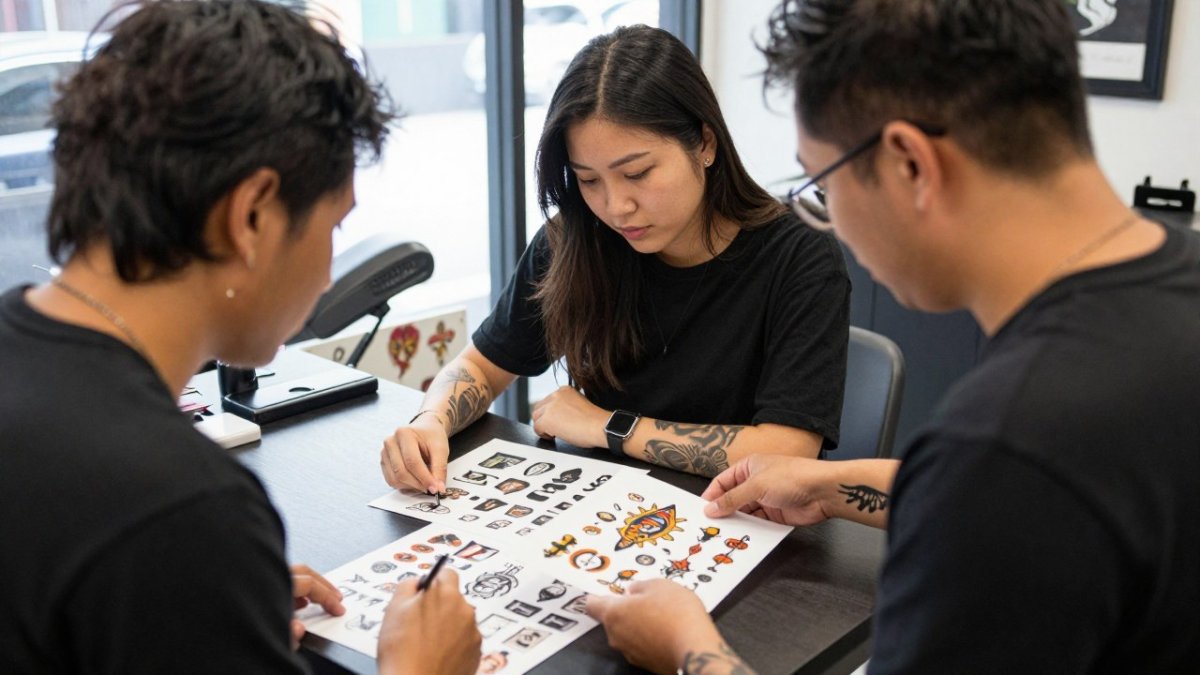
Here are the common options to explore:
- Traditional (American traditional): Bold black outlines, a limited color palette, and simple, clear shapes. These tend to hold their look well over time.
- Neo-traditional: Traditional roots with more detail, extra shading, and a wider range of colors.
- Realism: Designs that look like photographs, often portraits or natural scenes. These need careful shading and skilled work.
- Blackwork and black-and-grey: Solid black areas or smooth grey shading. Blackwork can be bold, while black-and-grey often looks soft and detailed.
- Script and lettering: Words, names, and quotes. Font and spacing matter more than color here.
- Anime-style: Bold lines and expressive character art, often in bright colors.
Watch out: Many people pick a style only because they saw it on social media. Look at healed photos, not just fresh ones, because healing can change how a design reads.
Use reference images to sort your options. Save pictures you like, then notice what they have in common. You may find a pattern, such as heavy outlines or soft shading, that points to a style.
Compare Blackwork and Dotwork Tattoo Style Trade-Offs
Blackwork and dotwork can look similar at first glance, but they are built differently, and those differences affect how long the session takes, how the design ages, and what you will pay.
Blackwork relies on solid black fills, bold shapes, and high contrast. The work is mostly packing large areas with ink, so session time depends heavily on the size of the filled area.
Dotwork builds images from many tiny dots placed one by one. Each dot takes time, so density drives the session length.
Here is how the two styles compare on the factors that matter most for planning:
| Factor | Blackwork | Dotwork |
|---|---|---|
| Session time driver | Area of solid fill | Number of dots and density |
| Aging concern | Edges may soften slightly | Fine dots may blur or spread |
| Typical sessions for large pieces | Often fewer, longer sessions | Often more sessions with shorter blocks |
| Touch-up likelihood | Lower for bold fills | Higher for very fine, dense work |
| Best for | Graphic shapes, bold contrast | Gradients, geometric patterns, texture |
When you ask for a quote, the number of hours and sessions will shape the total. Pricing depends on the design, size, and number of sessions, so the most useful step is to contact Heebee Jeebees Tattoo for a quote.
For maintenance, blackwork often asks less of you over time, while dotwork may benefit from a touch-up session if fine areas soften. Ask your artist how they plan spacing for your specific design.
Think about your end goal too. If you want a bold statement that reads from across a room, blackwork is often the more practical path.
Realism vs Traditional Tattoos for Sleeve Designs
Sleeves are large projects, so the style choice matters even more. Realism and traditional are two popular options, and they handle a full arm very differently.
Traditional sleeves use strong outlines and flat color. They are usually easier to read from across a room, and the bold lines help the design hold up as the skin changes.
Realism sleeves aim for photographic detail. They can be stunning, but fine shading and small details may soften over time, especially in areas with lots of movement or sun exposure.
For a sleeve, think about these points:
- How much detail do you want in the final design?
- Do you prefer a unified theme, or several separate images?
- How do you feel about the design looking sharper in the first year versus the tenth?
Many people find that a traditional or neo-traditional sleeve gives them a clear, lasting look. Others choose realism because they want a specific photo or portrait. Both can work well when the artist matches the style to the design.
Matching Style to Placement and Body Movement
Where a tattoo sits on your body affects how it looks. Skin on the inner arm, ribs, and hands behaves differently from skin on the back or thigh.
Areas that move a lot, like elbows, knees, and fingers, can stretch the design. Fine lines and tiny dots are more likely to blur there. Bold outlines and simple shapes usually hold up better in these spots.
Think about space, too. A realism portrait needs room for shading and depth. A small script piece fits on the wrist or behind the ear. Ask your artist whether your chosen style fits the spot you have in mind.
Sun exposure and skin texture also matter. Keep your design in mind as you plan where it will go, and talk with your artist about placement early.
Check Artist Portfolios and Book Your Consultation
Choosing the right style is only half the job.
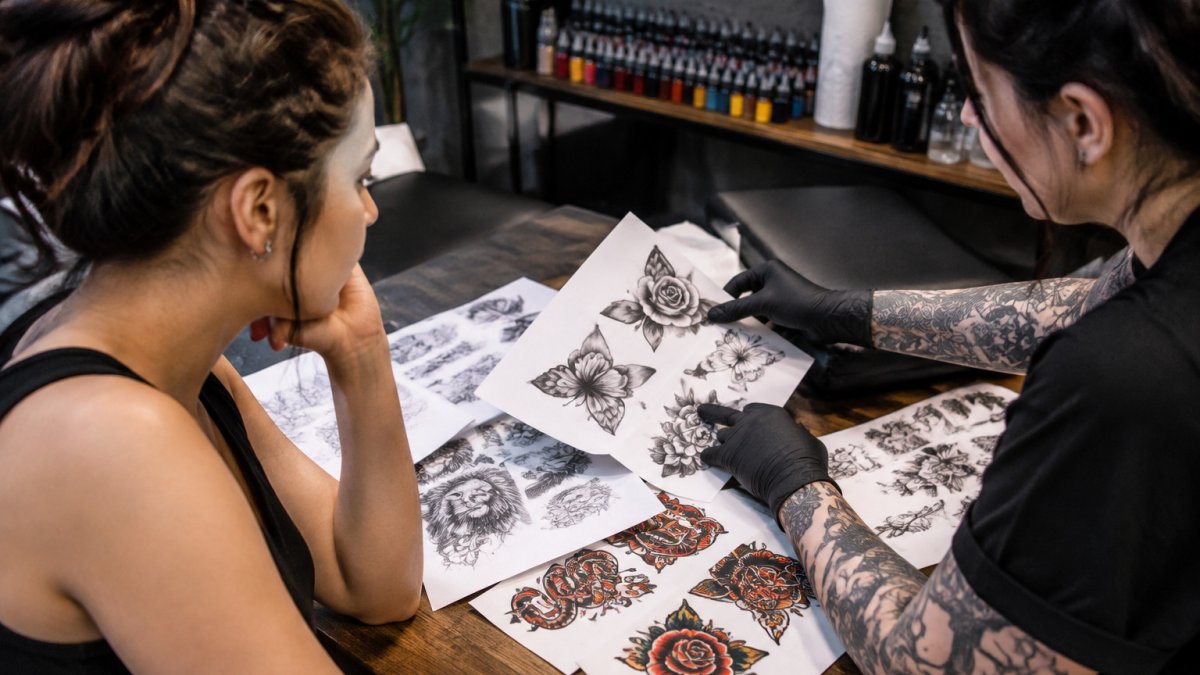
Start by sorting the portfolio into three groups: fresh photos, healed photos, and photos taken in a clear, even light. Fresh photos show crisp lines right after the session, but they do not tell you much about longevity. Healed photos, usually taken several weeks to a few months after the session, show whether the outlines stayed clean and whether the shading settled evenly. If an artist only posts fresh work, ask to see healed examples of the same style.
Next, check consistency. Look at ten or more pieces in the style you want. Do the outlines have the same steadiness from piece to piece, or do only a few highlight images look sharp?
Then confirm relevance. An artist who does excellent traditional work may not be the right choice for fine-line script or detailed realism. Look for examples that match your subject, size, and placement.
A simple checklist helps you compare artists side by side:
- Healed work: Are there photos from at least a few weeks after the session?
- Consistency: Do lines and shading look steady across many pieces?
- Style match: Does the artist show multiple examples of your chosen style?
- Subject and scale: Have they done designs similar in size and complexity to yours?
- Clean edges: Are outlines crisp and do color or grey blends look smooth without patchiness?
Watch out: A portfolio shows the best work an artist chooses to post, so ask to see a few unedited photos or a sketch-to-tattoo example if you want a fuller picture.
At Heebee Jeebees Tattoo, our artists work across a range of styles, including realism, traditional, script, anime, and floral designs. We have been established since 1993, and walk-ins are welcome on a first-come, first-served basis.
Book a consultation before you commit. Bring your reference images, your meaning, and your placement idea. Talk through what works, what may need adjusting for your body, and how the design is likely to age.
Call now to book your consultation and bring your ideas to life with Heebee Jeebees Tattoo.
Frequently Asked Questions
How do I know what style tattoo I want?
Start with what you already keep returning to: the artwork you save, the subjects you draw in your notes app, and the colors you wear. Then narrow those preferences by how much detail you want, how bold the lines should be and how the design will age on your skin. Bring three to five reference images to a consultation so the artist can see the common thread and suggest a style that fits it.
Which tattoo styles work best for sleeve designs?
Sleeves reward styles that can carry a connected composition across curved areas of the arm. Traditional and neo-traditional work often suits sleeves because bold outlines and flat color hold up at a distance. Realism can work well too, but it needs a skilled artist and careful planning of focal points, since fine shading can soften over time.
How do I find a tattoo artist who specializes in my preferred style?
Look at the artist's portfolio for consistency rather than variety. If you want blackwork, you should see clean, solid black fields and sharp edges repeated across many pieces. Ask how many tattoos in your chosen style the artist completes each month, and request healed photos where possible so you can judge how the work ages.
Is realism or traditional better for a first tattoo?
Neither is better in general. Traditional styles usually use bold outlines and simpler color, which tends to be forgiving for a first piece. Realism requires more detail and shading, so it is best matched with an artist whose portfolio shows strong photorealistic work. Discuss your placement and design with a qualified artist before deciding.
