 ultimate-guide
7 Things to Expect at a Walk-In Tattoo Shop
Last Updated: November 12, 2026
Quick Summary
A walk-in tattoo is a session you get without an appointment, offered on a first-come, first-served basis. You'll check in with photo ID, sign a consent form, wait for an available artist, review the design and stencil, then sit for the tattoo and an aftercare walkthrough. The wait is the least predictable stage, so ask the front desk for a realistic estimate.
- Check-in and paperwork usually take 10 to 15 minutes, so have your ID and payment method ready.
- Consultation and design review take 10 to 20 minutes; bring reference images on your phone.
- Stencil placement and approval take 5 to 10 minutes and are the easiest moment to change size or placement.
- A small piece can take 30 minutes, while a palm-sized piece often takes one to two hours.
- Eat a full meal, hydrate, and skip alcohol for at least 24 hours before your visit.
Table of Contents
- How a Walk-In Tattoo Visit Actually Works
- Walk-In Tattoo Etiquette Every First-Timer Should Know
- How to Prepare for a Walk-In Tattoo Before You Leave Home
- Custom vs Flash Tattoos for Walk-Ins: Which Fits Your Idea
- The Average Cost of Walk-In Tattoos and What Drives It
- When the Shop Is Full or Declines Your Request
- Frequently Asked Questions
How a Walk-In Tattoo Visit Actually Works
A walk-in tattoo is a tattoo session you get without a scheduled appointment, offered on a first-come, first-served basis. At Heebee Jeebees Tattoo, we welcome spontaneous clients on a first-come, first-served basis, and the process is simpler than most first-timers expect.
Arrival, Check-In, and the Consent Form
You'll check in at the front desk, show photo identification to prove you meet the age requirement, and sign a consent form covering health questions and aftercare.
The consent form is not a formality. It typically asks about blood thinners, pregnancy, diabetes, skin conditions like eczema or psoriasis, and recent alcohol or drug use.
While you wait, watch the station. Ask about sterilization and licensing before you sit down.
A Realistic Timeline From Door to Done
Most walk-in visits follow a predictable rhythm, though busy hours stretch every stage. Treat these as ranges, not promises:
- Check in and sign paperwork (10-15 minutes). Have your ID and payment method ready; the front desk may also take a deposit or hold a card on file.
- Wait for an available artist (varies widely; arriving early helps). Ask the front desk for a realistic estimate before you settle in.
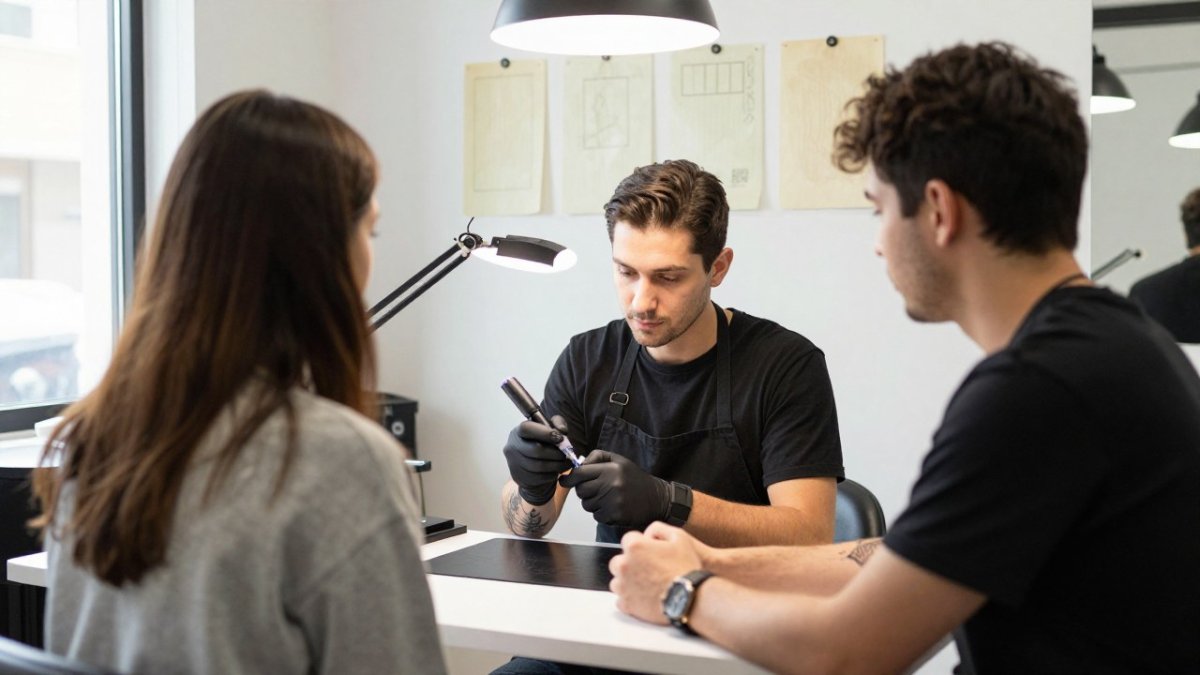
- Consultation and design review (10-20 minutes). You'll discuss size, placement, style, and budget. Bring reference images on your phone. The artist may suggest simplifying the design so it fits a walk-in slot.
- Stencil placement and design approval (5-10 minutes). The artist applies a stencil and lets you check it in a mirror. Speak up now if the placement or size is off, this is the easiest moment to change it.
- The tattoo session itself (30 minutes for a small piece, longer for medium-sized work). Small flash pieces can be done in under an hour; a palm-sized piece often takes one to two hours. Ask for a break if you need one.
- Aftercare walkthrough and payment (10 minutes). The artist covers aftercare, and you settle the bill.
Watch out: the wait is the least predictable stage, so don't schedule a walk-in right before a hard commitment. If you have a deadline, call ahead or book an appointment instead.
What to Do If the Shop Is Full or Declines the Request
A full shop or a declined request isn't a rejection of you. Artists may decline complex designs requested as walk-ins, since a rushed custom piece may not serve the client well. If the shop is full, ask about the next walk-in window, join a waitlist if one exists, or book an appointment.
Here's the typical door-to-done rhythm of a walk-in visit, with realistic time ranges for each stage.
| Stage | Time | Note |
|---|---|---|
| Check in and sign paperwork | 10-15 minutes | Have ID and payment method ready; deposit may be taken |
| Wait for an available artist | Varies widely | Arriving early helps; ask front desk for estimate |
| Consultation and design review | 10-20 minutes | Discuss size, placement, style, budget; bring reference images |
| Stencil placement and design approval | 5-10 minutes | Easiest moment to change placement or size |
| The tattoo session itself | 30 minutes for a small piece | Palm-sized piece often takes one to two hours |
| Aftercare walkthrough and payment | 10 minutes | Artist covers aftercare; you settle the bill |
Time ranges for each stage of a walk-in tattoo visit
Walk-In Tattoo Etiquette Every First-Timer Should Know
Treat the shop like any professional space: be on time, be sober, and be patient. Walk-in tattoo etiquette comes down to respecting the artist's time and the people ahead of you. Keep your phone calls outside and avoid crowding another client's station. If you bring friends, have them wait in the lobby rather than hover over the chair. Ask before photographing anyone's work, and tip your artist for good service, the same as you would at a salon.
How to Prepare for a Walk-In Tattoo Before You Leave Home
Preparation starts before you walk in. Eat a full meal, hydrate, and skip alcohol for at least 24 hours. Wear clothing that gives easy access to your placement, like shorts for a thigh piece or a tank top for a shoulder design. Shower beforehand and avoid heavy lotions on the skin. Bring reference images on your phone, plus your ID and a payment method.
Custom vs Flash Tattoos for Walk-Ins: Which Fits Your Idea
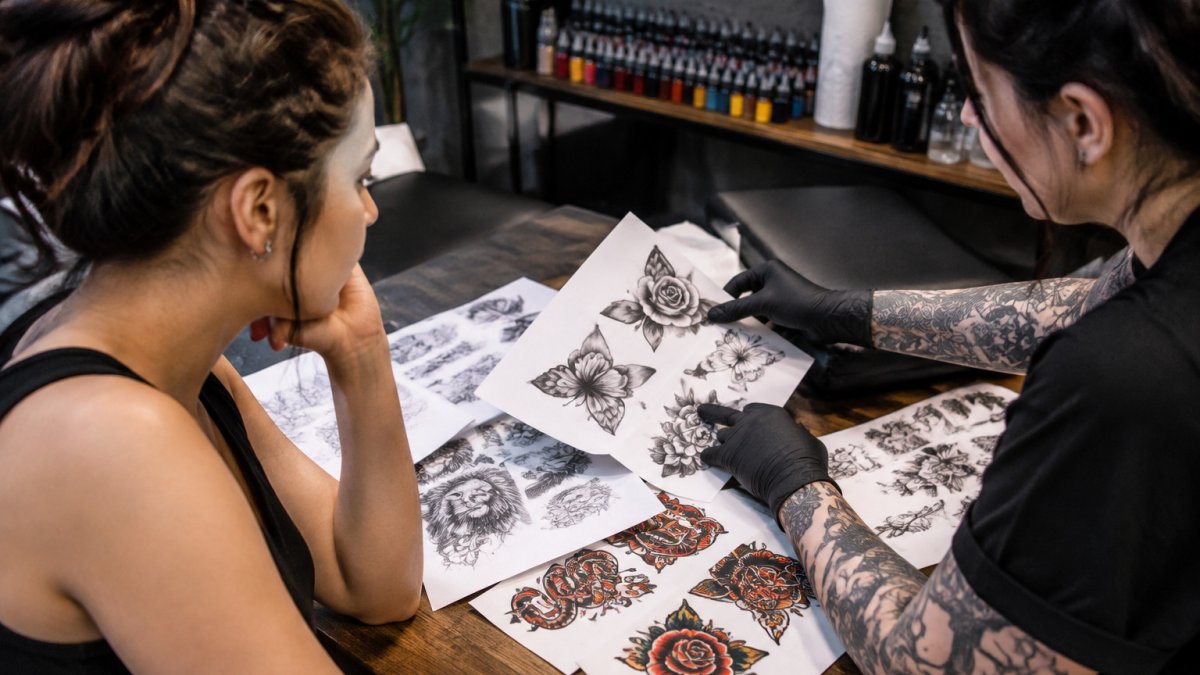
Choosing between custom vs flash tattoos for walk-ins depends on your idea and your timeline. Flash tattoo designs are pre-drawn pieces, often displayed on the wall, ready to tattoo same-day. Custom design work takes more planning, and a complex concept may need a scheduled consultation so the artist can do it justice. A walk-in tattoo guide from Hush Aesthetic notes that walk-in availability varies by shop, with some studios appointment-only.
The Average Cost of Walk-In Tattoos and What Drives It
Pricing depends on size, placement, detail, and artist time, so no single average cost of walk-in tattoos applies across every shop. What you can count on is a structure: most studios set a shop minimum, charge either an hourly rate or a flat rate per piece, and may require a deposit to hold a slot. Ask for a quote during your consultation before any needle touches skin.
The Cost Drivers That Actually Move the Number
- Shop minimum. Most shops have a minimum charge that covers setup, sterile supplies, and the artist's time even for a tiny piece. A small walk-in tattoo often lands at or near that minimum rather than at a per-minute rate.
- Size and detail. A simple line piece costs less than dense shading, color packing, or fine detail. Detail drives time, and time drives price.
- Placement. Bony, curved, or sensitive areas like ribs, hands, and feet take longer and may carry a higher rate.
Hourly Versus Flat Rate
Some studios price larger or custom pieces by the hour, and others use a flat rate for smaller work. Ask which applies to your piece. If you're quoted hourly, ask for a realistic range based on similar pieces the artist has done. If you're quoted flat, confirm what's included, color, touch-ups, and aftercare supplies are not always bundled.
Deposits, Payment, and Tipping
A deposit may be required to hold a walk-in slot, and it is usually applied to the final price. Confirm whether it is refundable and under what conditions. Payment methods vary: many shops, including ours, accept Cashapp, Venmo, and credit cards, but some still prefer cash. Ask before you sit down so you're not scrambling at the end. Tipping is customary for good service, the same as at a salon, 15-20% is a common range, though it is never required.
How to Ask for an Estimate Without Guessing
Bring your reference image, state your size in inches, name the placement, and ask: "What's the range for this as a walk-in today?" A good shop will give you a range and explain what would push it higher.
Watch out: a quote that is dramatically lower than other shops in the area is a reason to ask about sterilization and licensing, not a reason to celebrate. Price should never be the only filter.
When the Shop Is Full or Declines Your Request
A full shop or a declined request isn't a rejection of you. Artists may refuse complex designs requested as walk-ins, according to Mantra Tattoo's guide to the walk-in process, because a rushed custom piece rarely serves the client well.
A walk-in tattoo should feel spontaneous, not stressful. At Heebee Jeebees Tattoo, our award-winning artist on staff and our walk-ins-welcome policy make it easy to turn a last-minute idea into lasting art.
Frequently Asked Questions
Can you walk in and get a tattoo the same day?
Often, yes, but it depends on the shop and the artist's schedule. Walk-in availability varies between studios. Simple designs are generally the easiest to fit in same-day. Complex custom work usually needs a consultation and a booked session, so call ahead or check the shop's walk-in policy before you drive over.
What is the standard walk-in tattoo etiquette?
Call before you go to confirm walk-in hours, arrive with your ID and payment ready, and bring clear reference images if you have a specific idea. Be honest about your budget and flexible on design details. Tipping your artist for good service is customary. Good walk-in tattoo etiquette also means showing up clean, sober, and fed, and respecting the artist's right to decline a design that will not work as a walk-in.
How much does a walk-in tattoo cost, and what affects the price?
Pricing depends on the shop's minimum, the artist's hourly rate, the size and detail of the design, and placement. Pricing depends on factors such as size, detail, and placement. Ask for a quote before you commit, and confirm payment options upfront.
Do tattoo artists prefer appointments over walk-ins?
Many artists do prefer appointments for larger or detailed work, because it gives them time to plan the design and prepare the stencil. That said, plenty of artists enjoy walk-ins for flash pieces and spontaneous ideas, especially at studios that build walk-in hours into their schedule. If you want a specific artist or a complex custom tattoo, booking ahead is the safer route. For small, simple designs, a walk-in is often welcome.